
The Android flagship race in 2026 is no longer just about raw performance. Phones have become deeply personal devices shaped by software philosophy, camera tuning, ecosystem integration, and the tiny usability details that only become obvious after weeks of use.
That is exactly why the comparison between the OPPO Find X8 Ultra and the vivo X200 Ultra is so fascinating.
On paper, both devices sit at the absolute top of the Android market. Both deliver elite cameras, premium hardware, excellent battery life, bright displays, and AI-powered software features. Yet despite their similarities, they feel completely different in daily use.
The OPPO Find X8 Ultra is polished, refined, and thoughtful.
The vivo X200 Ultra feels more experimental, more aggressive, and at times almost unapologetically excessive.
Choosing between them is less about specs and more about deciding what kind of smartphone experience you actually want.
Cameras: Natural vs Dramatic
The biggest difference between OPPO Find X8 Ultra vs vivo X200 Ultra comes down to photographic philosophy.
The OPPO Find X8 Ultra leans heavily into natural colour science. Images have that signature Hasselblad-style balance where tones feel realistic without looking flat. Skin tones avoid excessive smoothing, shadows retain detail naturally, and photos often resemble what your eyes actually saw.
OPPO also packs in several enthusiast-friendly features that make the camera system feel surprisingly versatile. Its XPan mode gives photos a cinematic widescreen aesthetic, while its film-style filters add character without completely overwhelming the image. One particularly underrated feature is the ability to shoot panoramic photos using every lens on the device — something rarely seen outside the Apple iPhone ecosystem.
The AI zoom system on the OPPO is also impressive. It does not always hit perfectly, but it succeeds more often than expected, especially at medium-to-long distances.
The vivo X200 Ultra, however, takes a very different approach.
Where OPPO aims for realism, vivo aims for impact. Photos are more processed straight out of the camera, but for many users, that actually makes them look more visually appealing. Colours pop harder, contrast is stronger, and images immediately feel social-media ready.
The zoom performance on the vivo is genuinely remarkable. While both phones are extremely close up to around 10x magnification, the vivo begins to pull ahead once you start pushing further. Its camera hardware feels built for people who love experimenting with extreme focal lengths.
Vivo also includes some of the most entertaining AI photography tools currently available on a smartphone. Users can add environmental effects such as snow or cherry blossoms directly into photos, while the AI Expand feature intelligently extends image framing in ways that can feel almost magical when it works properly.
One of vivo’s smartest decisions was opting for a 35mm-style main camera rather than the more common 23mm to 25mm equivalent found on most smartphones. The result is less distortion and a more natural perspective that many photography enthusiasts will appreciate immediately.
Still, neither device can truly claim a decisive win. Selfie cameras are excellent on both phones, telephoto macro photography works extremely well across both systems, and their AI editing tools are among the best available on Android today.
Hardware: Refined Elegance vs Bold Personality
Physically, both the OPPO Find X8 Ultra and vivo X200 Ultra phones could not feel more different.
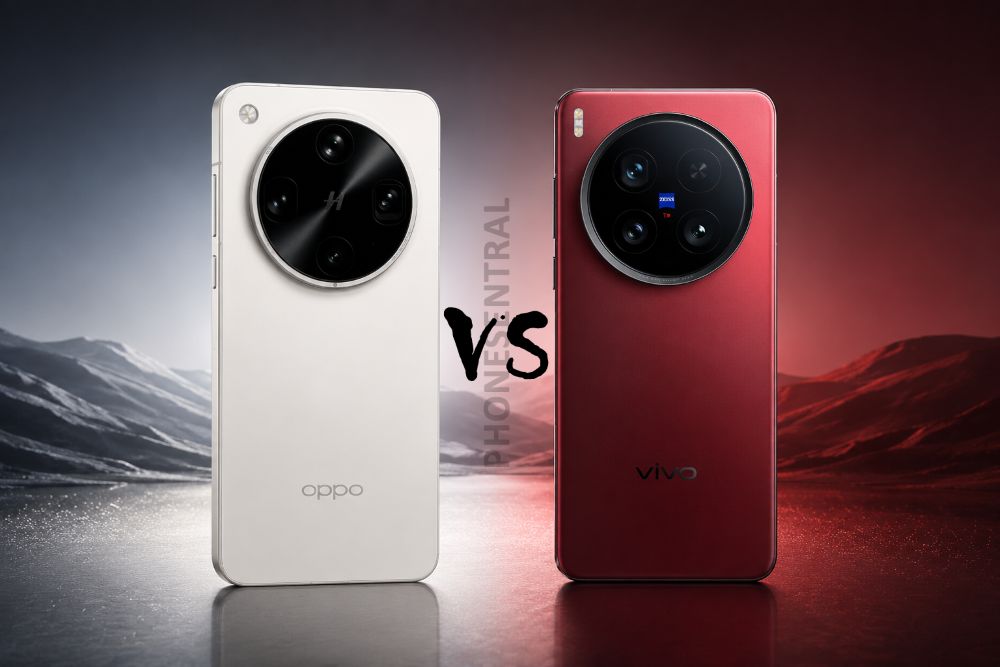
The OPPO Find X8 Ultra is clearly designed with refinement in mind. Its camera bump is significantly smaller than vivo’s enormous circular module, making the device look cleaner and more balanced overall. The grey and silver finish, in particular, feels understated yet premium in person.
OPPO also adopts a flat display similar to devices like the Samsung Galaxy S24, Google Pixel, and iPhone lineup. For many users, this instantly improves usability and makes screen protector compatibility far less frustrating.
One standout feature is the haptic camera button. Unlike the physical buttons seen on some competitors, pressing the OPPO’s shutter control introduces virtually no shake into the frame. It feels surprisingly precise and polished.
The addition of a dedicated Action Button also proves genuinely useful in daily use. It can quickly trigger AI functions, launch translation tools, or perform custom shortcuts without needing to unlock the phone and dig through menus.
Even small touches stand out. Holding the power button to activate the flashlight sounds minor, but becomes oddly convenient once muscle memory kicks in. OPPO also integrates magnetic accessory support directly into the device, bringing a MagSafe-like experience to Android users without requiring bulky cases.
The vivo X200 Ultra takes the opposite approach.
Its gigantic camera bump is impossible to ignore, but strangely, it works. The module naturally becomes a resting point for your finger, making the phone feel more stable during one-handed use.
The red colour option is particularly striking and arguably one of the best-looking smartphone finishes released this year. Vivo’s slightly curved display also gives the device a softer, more futuristic feel compared to OPPO’s flatter industrial design.
The physical camera button on the vivo is easier to press than Apple’s implementation, although it still lacks the finesse of OPPO’s haptic solution. The phone itself is narrower too, which some users may prefer for one-handed use, though others may find it slightly cramped.
Ultimately, both devices feel every bit like ultra-premium flagships. Build quality, display brightness, and battery performance are all excellent.
Software: Where the Real Battle Happens
The real deciding factor between these two phones is not hardware. It is software.
The ColorOS experience on the OPPO Find X8 Ultra feels cleaner, more refined, and more globally approachable. Typography looks better in English, UI scaling behaves more consistently, and the overall interface feels carefully polished.
Its AI assistant, XiaoBu, already integrates with DeepSeek AI functionality in China and introduces genuinely useful ideas. XiaoBu Memory, for example, can automatically analyse and categorise screenshots saved through the Action Button. For people who constantly save references, receipts, travel information, or social media posts, this feature feels like a glimpse into the future of mobile organisation.
The Dynamic Island-style interface on OPPO is also arguably the best implementation currently available on Android. Unlike Apple’s version, multiple live activities can coexist simultaneously, and users can swipe through them fluidly without the interface becoming cluttered.
OPPO’s O+ Connect ecosystem integration is another major strength. It works particularly well for users trapped between Android and Apple ecosystems, supporting file transfers, AirDrop-style sharing, and even screen projection features with devices like iPads.
The vivo X200 Ultra counters with its own software strengths through OriginOS.
Its drag-and-drop system is genuinely excellent and arguably the most intuitive implementation currently available on Android. Users can drag photos, addresses, or links directly into compatible apps through the Dynamic Island interface, reducing reliance on copy-and-paste workflows entirely.
Vivo’s widget customisation is also exceptional. The ability to place widgets inside folders sounds unnecessary until you try it and realise how powerful it can be for organisation-focused users.
Its XiaoV AI assistant approaches memory differently too. Instead of automatic categorisation, it builds more emotional and contextual relationships between saved content, creating something closer to a digital journal or “mind web.”
However, vivo’s implementation can also feel more intrusive. Some AI interactions take over the entire display, while OPPO handles similar actions more elegantly within smaller interface elements.
That is ultimately the recurring theme of this comparison.
Vivo consistently pushes boundaries and experiments with exciting ideas. OPPO consistently refines and simplifies them.
Ecosystem and Accessories
Both companies are now building ecosystems that extend far beyond smartphones.
OPPO already offers a strong smartwatch ecosystem alongside the OPPO Pad and keyboard accessories. Its Boundless Display multitasking system is one of the best productivity features currently available on Android tablets.
Vivo, meanwhile, appears to be positioning itself toward photography enthusiasts and immersive computing.
The company’s growing mobile photography accessories, lens systems, and rumours surrounding a Vision Pro-style headset suggest an ecosystem strategy focused heavily on creators and enthusiasts.
Final Verdict
The OPPO Find X8 Ultra is probably the safer recommendation for most people. Its software feels more mature, its colour science is more natural, and its ecosystem integration — especially for mixed Android-and-Apple users — is genuinely impressive.
The vivo X200 Ultra, however, is the more exciting phone.
Its zoom capabilities are astonishing, its AI photo tools are wildly creative, and its drag-and-drop software interactions feel ahead of much of the industry. It is a device that constantly experiments with new ideas, even if some of them still feel rough around the edges.
In the end, this comparison is not about which phone is objectively better. It is about deciding whether you value refinement or experimentation more.
If software consistency, natural photography, and polished usability matter most, the OPPO X8 Ultra stands out as the stronger overall package.
If you want the boldest camera hardware, insane zoom performance, and some of the most ambitious Android software ideas currently available, the vivo X200 Ultra is extremely difficult to ignore.
Get either phones below;